


Moving solid timber, marble and glass
Around here the furniture is not flat-pack. It is the dining setting bought when the house was built, the marble table from the old country, the wall unit that took four men to bring in and has not moved since. This page is how those pieces move without a mark, because that is the whole reason you hire a crew.
The three materials, and what each one punishes
Solid timber punishes twisting. A hardwood table is strong straight down and weak across its own joints. So it is never dragged, never pivoted on two legs, and big tables travel top-down on a padded surface with the base off if the fittings allow it. Leaves come out first and travel separately, wrapped as their own piece.
Marble and stone punish flexing. A marble top that spans a metre will crack under its own weight if it is carried flat. So marble travels on its edge, like glass, wrapped in blankets then film, and it never leans unsupported against a wall. The weight is honest: a decent marble top is a two-person carry minimum, whatever it looks like.
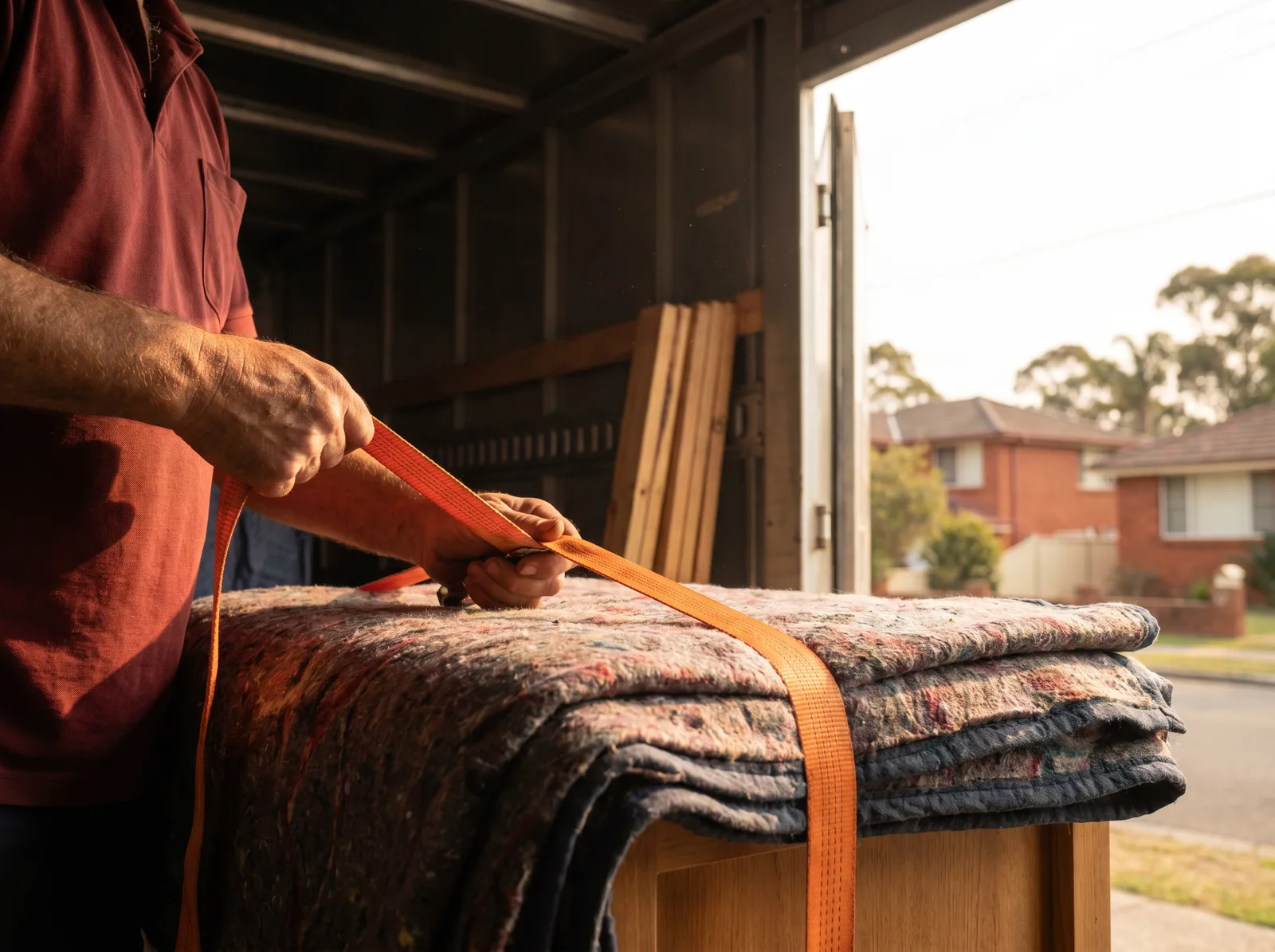
Glass punishes pressure points. One corner taking the load for a second is the whole story of every chipped cabinet. Glass doors come off or get locked and padded, shelves come out and travel flat-stacked with padding between, and mirrors ride edge-on in the truck, strapped so they cannot walk.
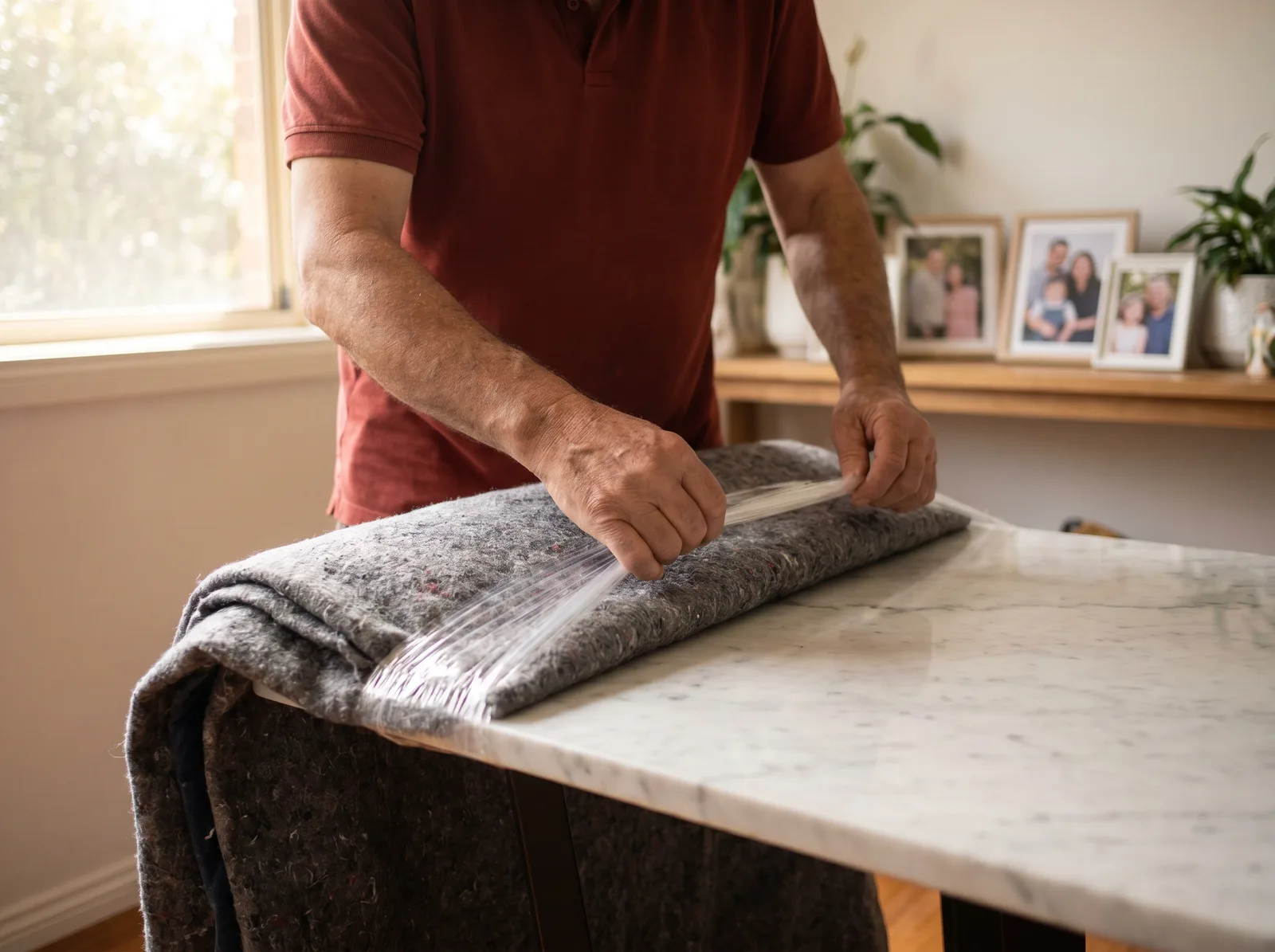
The wrap, in order
- Wrapped where it stands. The piece is padded in the room it lives in, not walked naked to the truck. Most furniture damage happens in doorways, so it goes through the doorway already armoured.
- Blanket, then film. The moving blanket takes the knocks; the stretch film holds the blanket and keeps the dust off. Film straight onto timber or stone can lift finishes and trap grit, so it never goes on bare.
- Corners get doubled. Corners take every knock. Fold the blanket double over them, tape the fold, and the piece can kiss a doorframe without either of them remembering it.
- Hardware in a bag, taped to the piece. The bolts from the mirror, the shelf pins, the leaf clips. One sandwich bag, taped where it cannot rub, and nothing is lost by Sunday.
The carry is planned, not improvised
Before a heavy piece moves a centimetre, the path is walked: which doors, which turns, where each person will stand at the tight spot, where it sets down if someone needs to re-grip. On stairs the lower end takes most of the weight, so the stronger grip goes low and the person above calls the steps. None of this is secret knowledge; it is just done every time, which is the actual difference between a crew and two strong mates.
What we ask before the day
- What is the piece, exactly? "A dining table" and "a marble-top dining table that seats fourteen" are different plans, different padding, and possibly a different crew.
- Does it come apart, and who last took it apart? If the answer is "it never has", we plan to move it whole and we bring the tools in case it surprises us.
- Stairs, and how many? Heavy plus stairs is where we may honestly suggest a third mover. It costs more per hour and usually costs less overall, because the carry stops being a siege.
- Where is it going, exactly? "The back room of the flat" means we plan the last doorway, not just the first one.
Pianos, pool tables and safes: we quote these individually and honestly after we know the piece and the path. Anyone who gives you a flat price for an unseen piano is guessing with your piano.
Where this fits in a whole move
Heavy pieces go first on the truck and come off last into their place. If your move is mostly ordinary and only two pieces are serious, tell us about those two pieces on the form and the rest of the day plans itself. The crew rates are the same as every job: $250 per hour for 2 movers and 1 truck, $350 per hour for 3 and 1, $500 per hour for 4 and 2, said once and put in writing.